
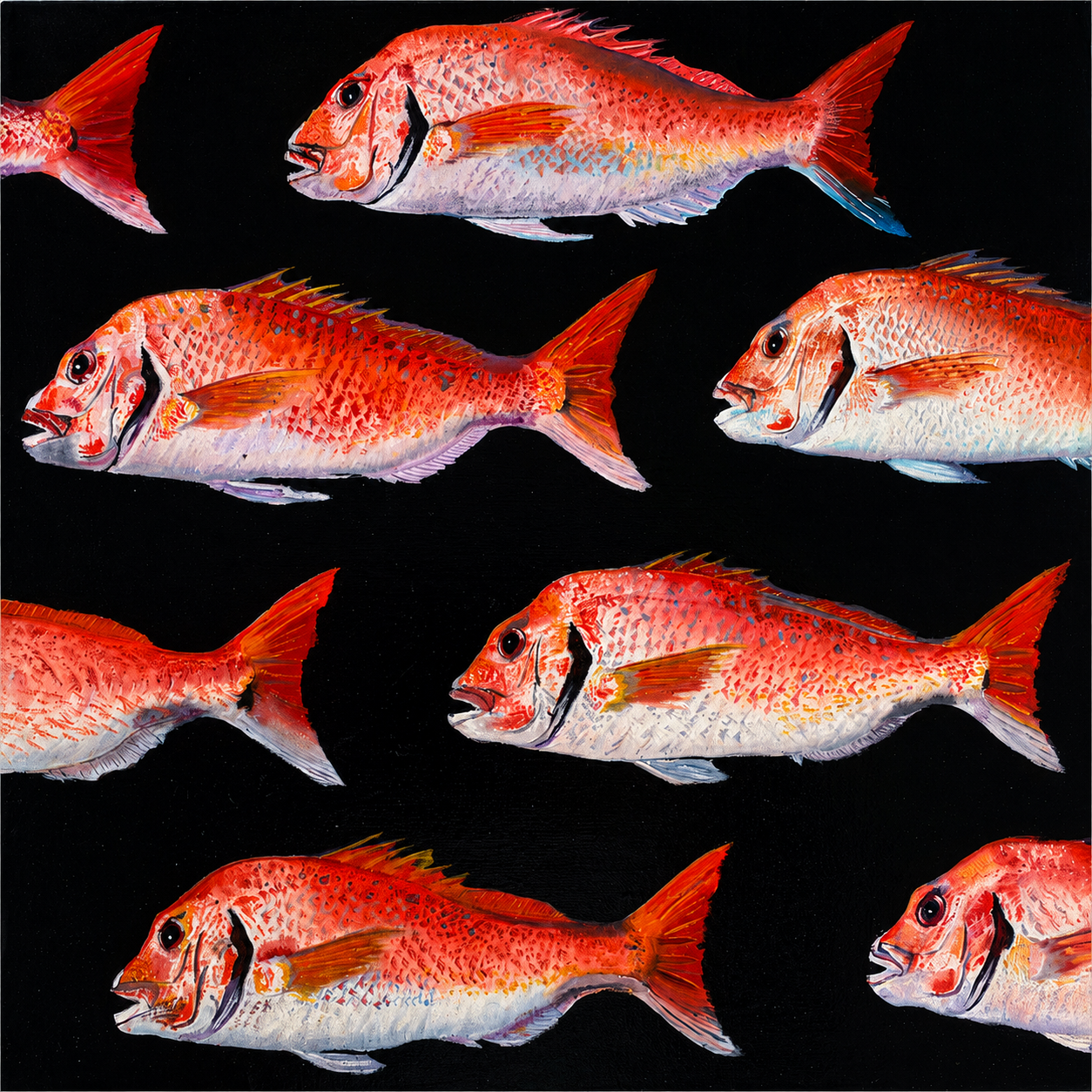
The earliest of my paintings
Oil
I began in acrylics before discovering oils, and oil is a magnificent medium. Its slower drying time gives you the ability to push paint around, to play with what's on the canvas and see what works and what doesn't. It lets me smooth the paint down so that a sky blends seamlessly. More recently I've moved to water-soluble oils, which offer those same qualities while being a healthier medium to work with.
What I paint
Landscapes, for me, are all about memories. Places I've been, places I've lived in, places that have given me great joy. That's probably why I paint so much around Mangawhai. I don't think you can paint a landscape with any sincerity without having experienced some emotion within it. An illustrator can copy a photograph very faithfully. A painter takes that photograph and puts his own spin on it. There is nothing new in painting. All you can do is put your own personality into it, to make it yours.
I like to look for the beauty in the ordinary, rather than in the iconic landscapes. If you look carefully, there is beauty in every landscape. Most of it gets missed because we all move too fast. That's why bicycling is such a lovely way to see the country. In 2021 my wife Sue and I rode the length of New Zealand, and I was struck by the beauty we witnessed every day, in the least obvious places, and in places I didn't know existed.
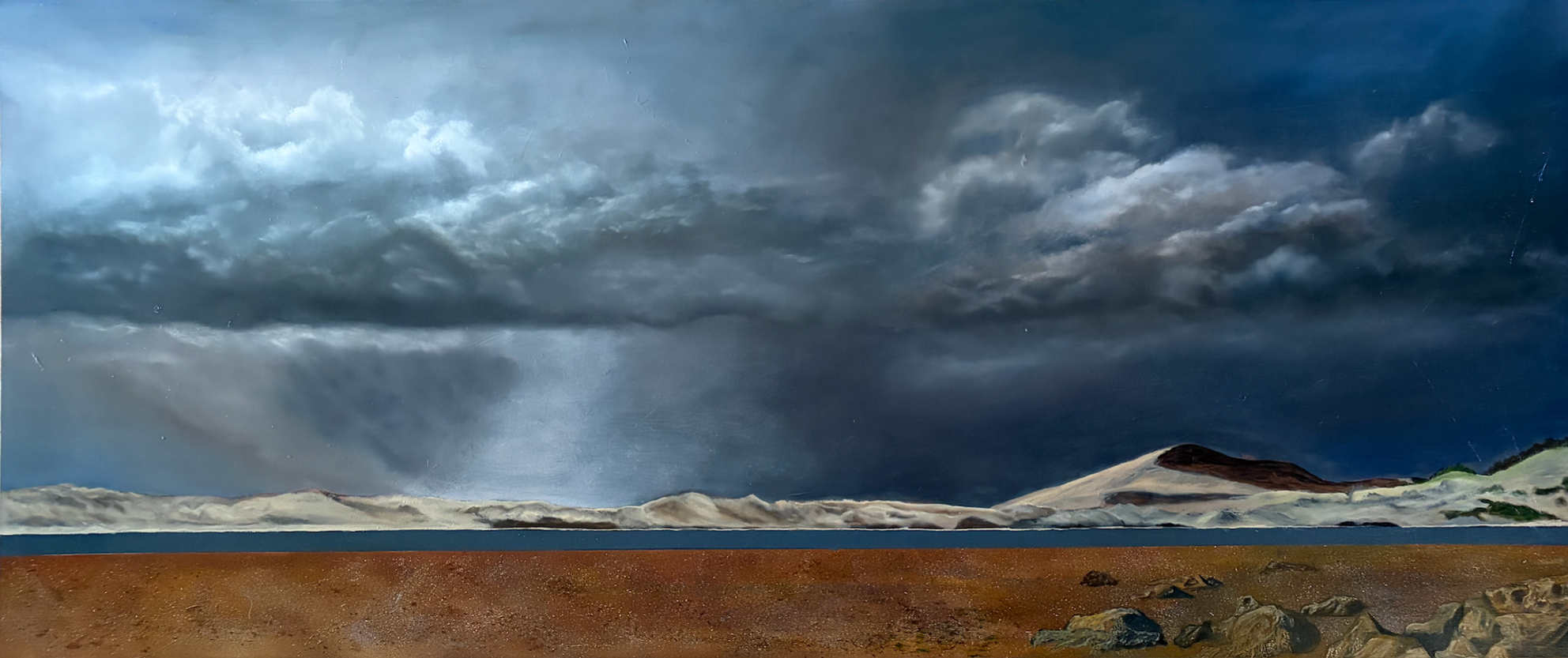
The sand dune at the mouth of the estuary has been a huge part of my landscape here, and I have watched it getting smaller and smaller over the years through erosion and wind. I suppose that by painting those big skies I am drawing attention to a landscape that is slowly disappearing. I often wonder if I just prefer to paint cloud patterns.
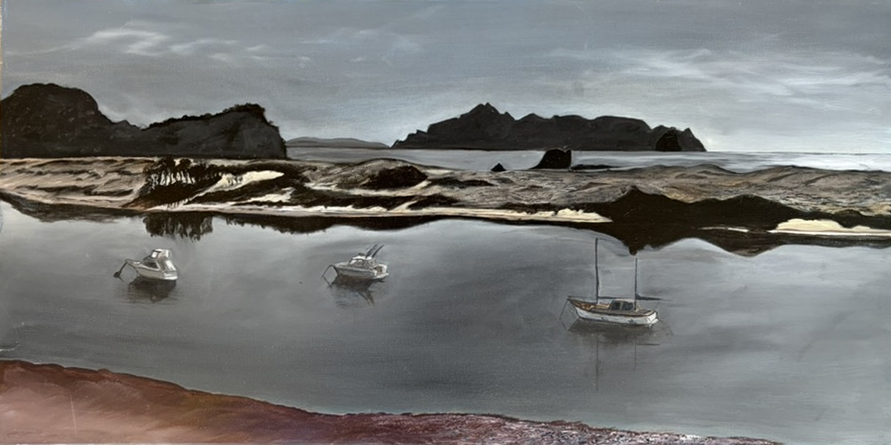
My Process
I was taught to paint from the darks to the lights. Everything starts with a horizon line; you need a reference point. With judicious use of masking tape, I always paint the sky first. I don't know why.
Painting seems to happen in blocks. Some days everything works and the painting flows. Other days every brushstroke feels forced, and that's when things go wrong. A lot of it is knowing when to paint and when not to. If a painting isn't working, rather than keep annoying it, I find it easier to walk away and look at it the next day. Sometimes that means masking up an area and starting again. Sometimes it means redoing the whole canvas.
Underneath these paintings there is a huge amount of angst, a fair number of expletives, and a great many mistakes. But the mistakes are papered over, and they have become part of the painting. That's where the personality of a painting comes in. None of these are perfect. None of us are perfect. That's what makes them interesting.
What gives a painting its personality is one of the great mysteries. If I knew, I'd bottle it. You don't always know what you're looking for, but when it suddenly appears out of the paint, you know it happened. Every now and again a little bit of magic happens on the canvas, and you look at it and say, I don't want to touch that again. Painting is a little bit like golf. You only need one good shot to keep you coming back.
I've always enjoyed having art in my own home, and I know the amount of pleasure it's given me. If my doodlings can give someone else a bit of pleasure, that's great.
I paint most days now, in the studio above my garage. There's always something on the easel that isn't working yet.
Email for commissions
Always happy to hear what you’re inspired by.